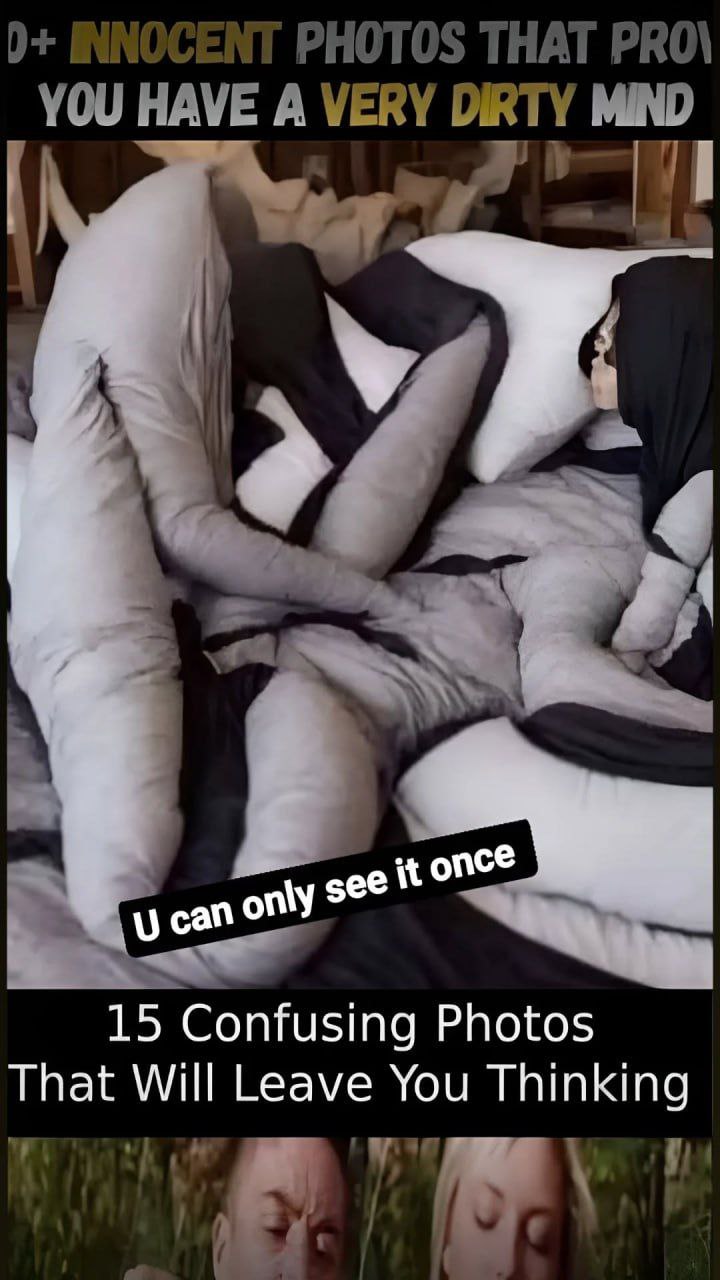
👇👇👇ST13. 29 Innocent Photos That Show How Optical Illusions Can Trick Your Brain👇👇👇
Have you ever looked at a photo and done a double take, only to realize that what you thought you saw wasn’t what it appeared to be? You’re not alone. Our brains are wired to recognize patterns—even when they’re not really there. This phenomenon is part of why optical illusions, visual perspective tricks, and everyday coincidences can fool us into seeing something quite different from reality.
In this list of 29 completely innocent photos, we explore how ordinary images can look unexpected or funny at first glance, thanks to lighting, angles, shadows, or camera timing. Don’t worry—nothing here is inappropriate. In fact, this post is about how your brain’s interpretation mechanisms can make innocent moments seem unusual.
Let’s explore how visual perception can lead us to jump to the wrong conclusions—and enjoy a good laugh along the way.
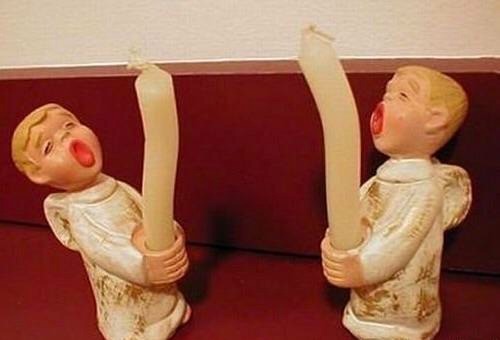
#1. A guaranteed best-seller among catholic priests.
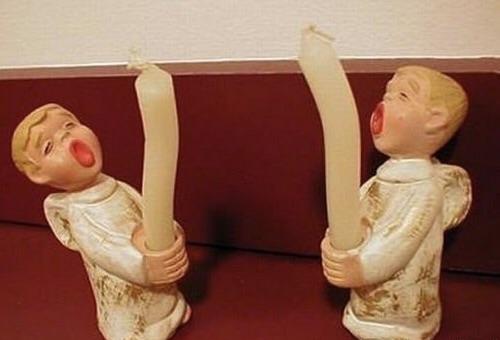
#2. Catch these watermelons!

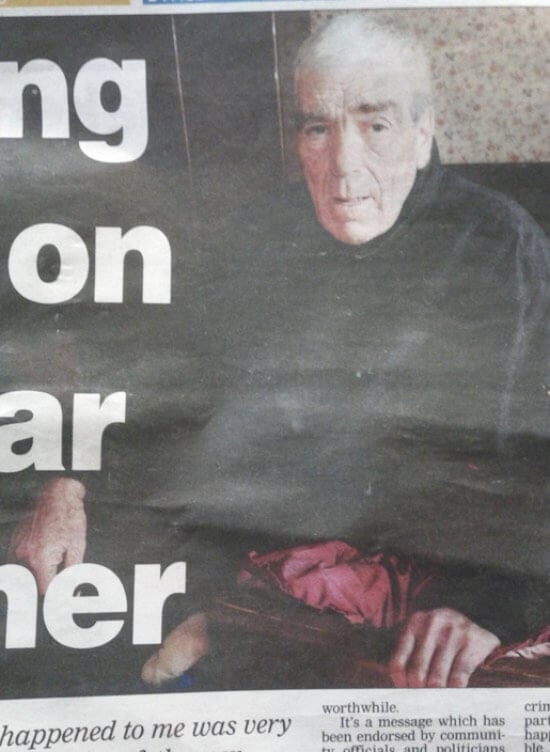
#5. A Catholic priest on casual Friday:
#6. Spider-Man is up for anything.
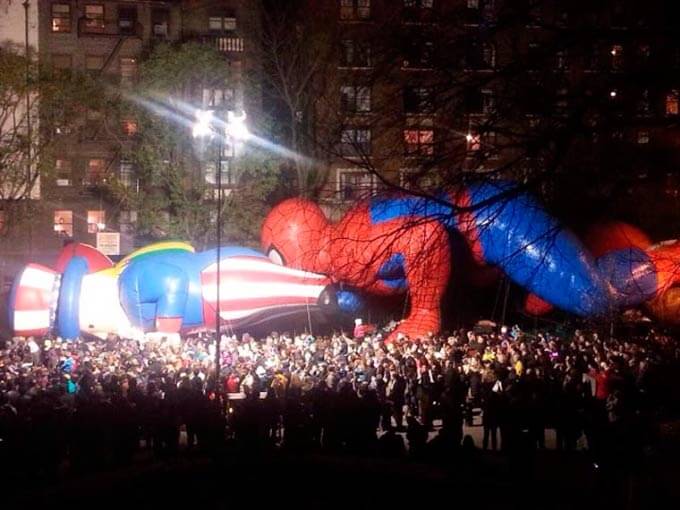
#7. Women’s golf trophy.

#8. Nice palm tree.

#10. Such an unfortunate photo when your hair-obscured upper arm got on the photo:

#12. Cheeky Minion.
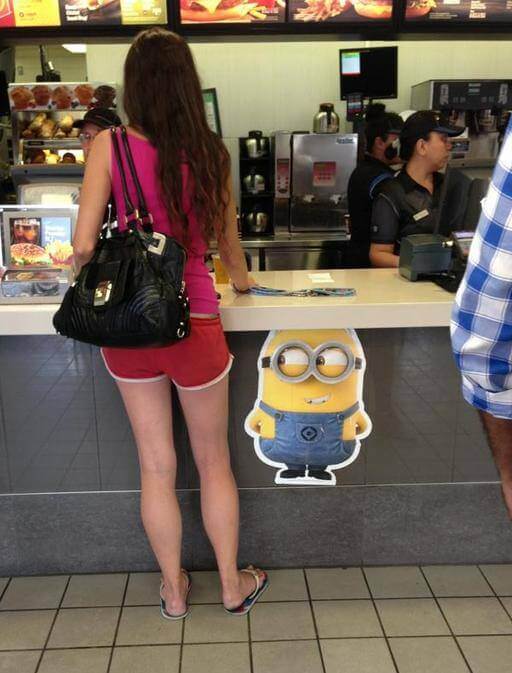
#14. He really, really likes this vase.

#15. This freshly opened butter looks YUM!
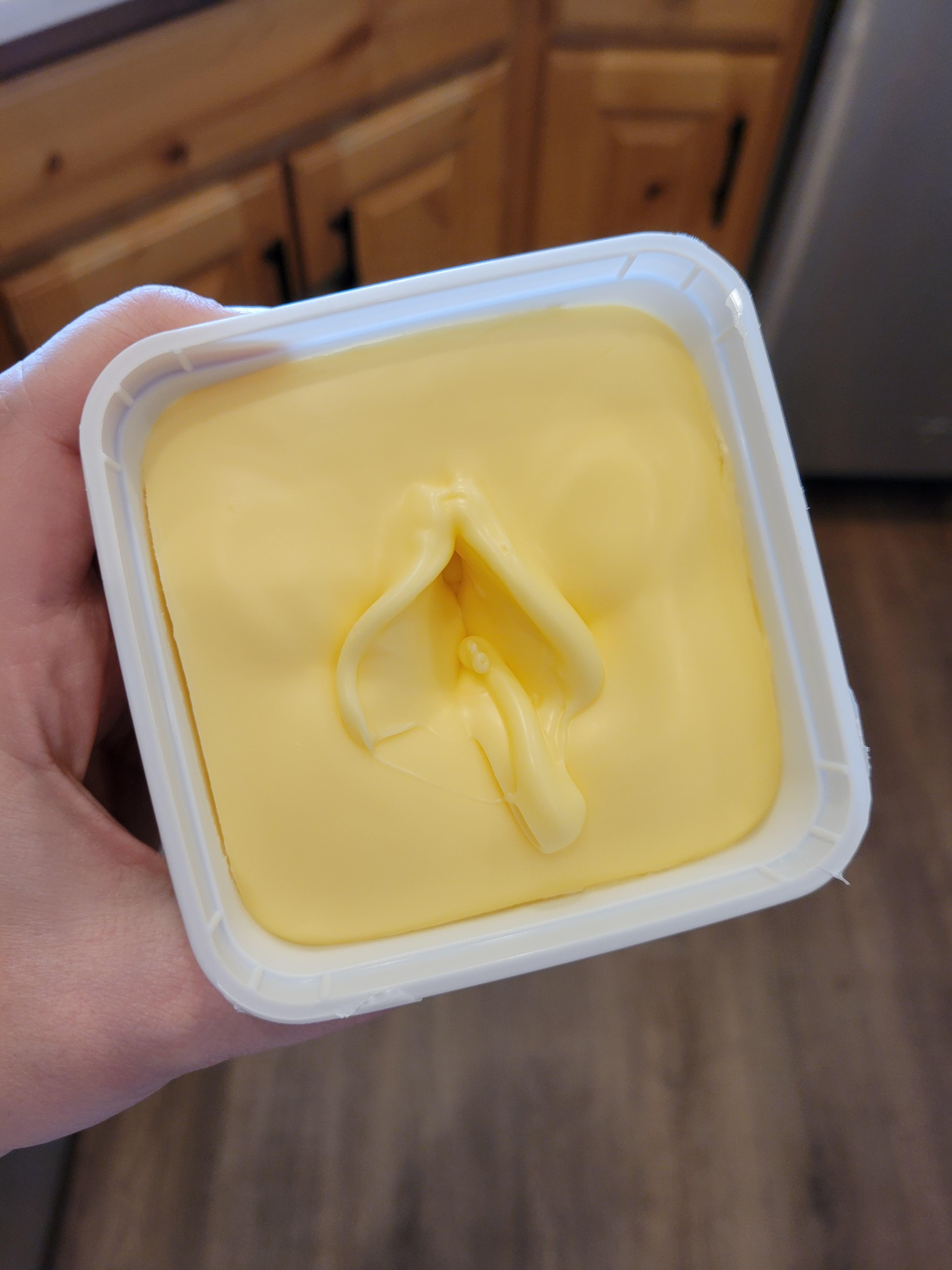
#16. This too.
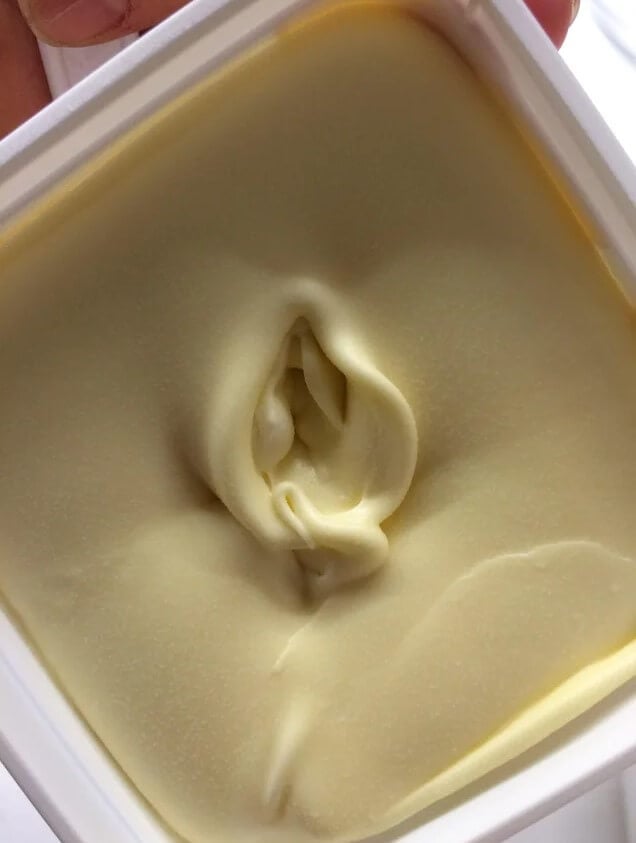
#17. Tasting time.
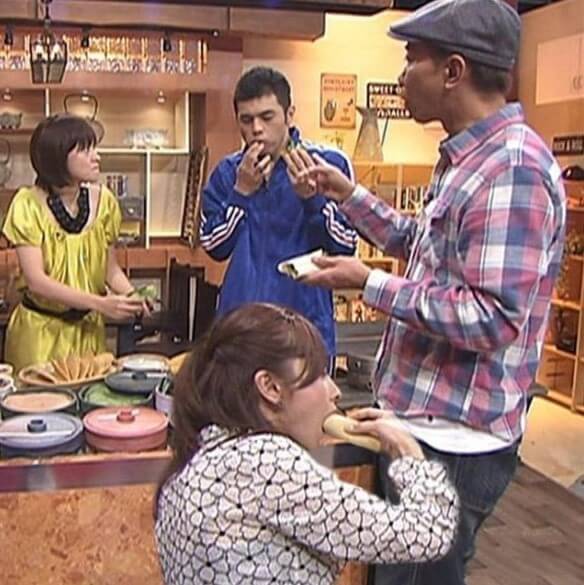
#19. Come on! It’s a kid’s show, don’t be a pervert.

#21. What a coincidence!
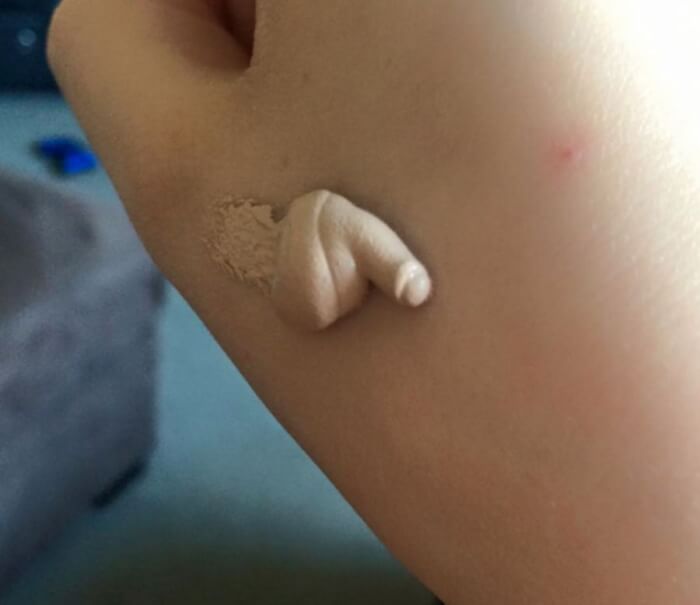
#22. Would you eat this pastry?

#23. That one BIG sweet potato.

#25. Hmm… starfish.
Panoramic pictures can be breathtaking if done right – a spectacular view stretching beyond the scope of peripheral vision, all in one frame. When left up to phone-wielding amateurs, however, they turn the panorama photo world into a warped, mutated circus of fear.


Why Do We See Things That Aren’t There?
Psychologists explain these funny misinterpretations through pareidolia, the human tendency to interpret random stimuli—like shadows, clouds, or shapes—as familiar objects or even faces.
According to Dr. Kang Lee, a professor at the University of Toronto who studies face perception, our brains are trained to identify meaningful shapes, especially human features.
“Even as children, we’re predisposed to see faces in objects. It’s not that we have a dirty mind—it’s that we have an active mind,” he says.
The effect is compounded when we view photos quickly, without giving our brain time to rationalize what it’s seeing.
How Lighting and Angles Influence What We See
A large portion of visual misinterpretation comes down to lighting, shadow, and camera angle. According to a study in Psychological Science, even small changes in light direction can drastically alter how a scene is perceived.
So when a palm tree casts an oddly shaped shadow, or a vase appears to have an unfamiliar silhouette due to backlighting—it’s not the object that’s unusual, but the conditions under which it’s viewed.
The Role of Humor in Innocent Illusions
Humor derived from visual misunderstandings is not only harmless—it’s healthy. Studies from the American Psychological Association show that laughter helps relieve stress, improve focus, and foster social connection.
Innocent image-based humor relies on:
- Timing (candid or accidental photos)
- Familiarity (objects mimicking something else)
- Misinterpretation (our brain jumping to conclusions)
Visual Illusions Are All Around Us
The next time a photo or image catches your attention for an unexpected reason, take a second glance. It might not be what you think at first—and chances are, it’s completely innocent.
Apps like Google Lens, or photography communities on platforms like Reddit’s r/mildlyinteresting, often showcase similar illusions where perception defies reality. They’re a great reminder that humor, art, and nature can all intersect in surprising ways.
Conclusion: A Clean Laugh, A Clever Illusion
These 29 photos aren’t proof of a “dirty mind,” but rather of the brain’s remarkable ability to interpret—and misinterpret—visual stimuli. From unexpected angles to perfectly timed snapshots, these images offer a light-hearted look at how perception shapes reality.
So the next time you do a double-take at an innocent photo, remember: it’s not about what you see—it’s how you see it.
Reputable Sources Cited
- American Psychological Association – Benefits of Humor
- Psychological Science – Visual Perception Studies
- University of Toronto – Dr. Kang Lee on Pareidolia
- Smithsonian Magazine – Why the Brain Sees Faces in Objects